
Preparing for a Performance: How to Beat Performance Anxiety
A student came to her lesson today with a performance looming tomorrow. She’d prepared fairly well. A tricky Baroque piece with lots of cross-hand movement was in good enough shape for a casual performance. But as I listened, I could tell it wasn’t strong enough to withstand performance-day nerves.”
I wanted to give her something that would make a real difference in the 24 hours she had left. Not slow practice. Not the metronome. Not even a normal run-through.
Instead, I asked her to do something a little unexpected:
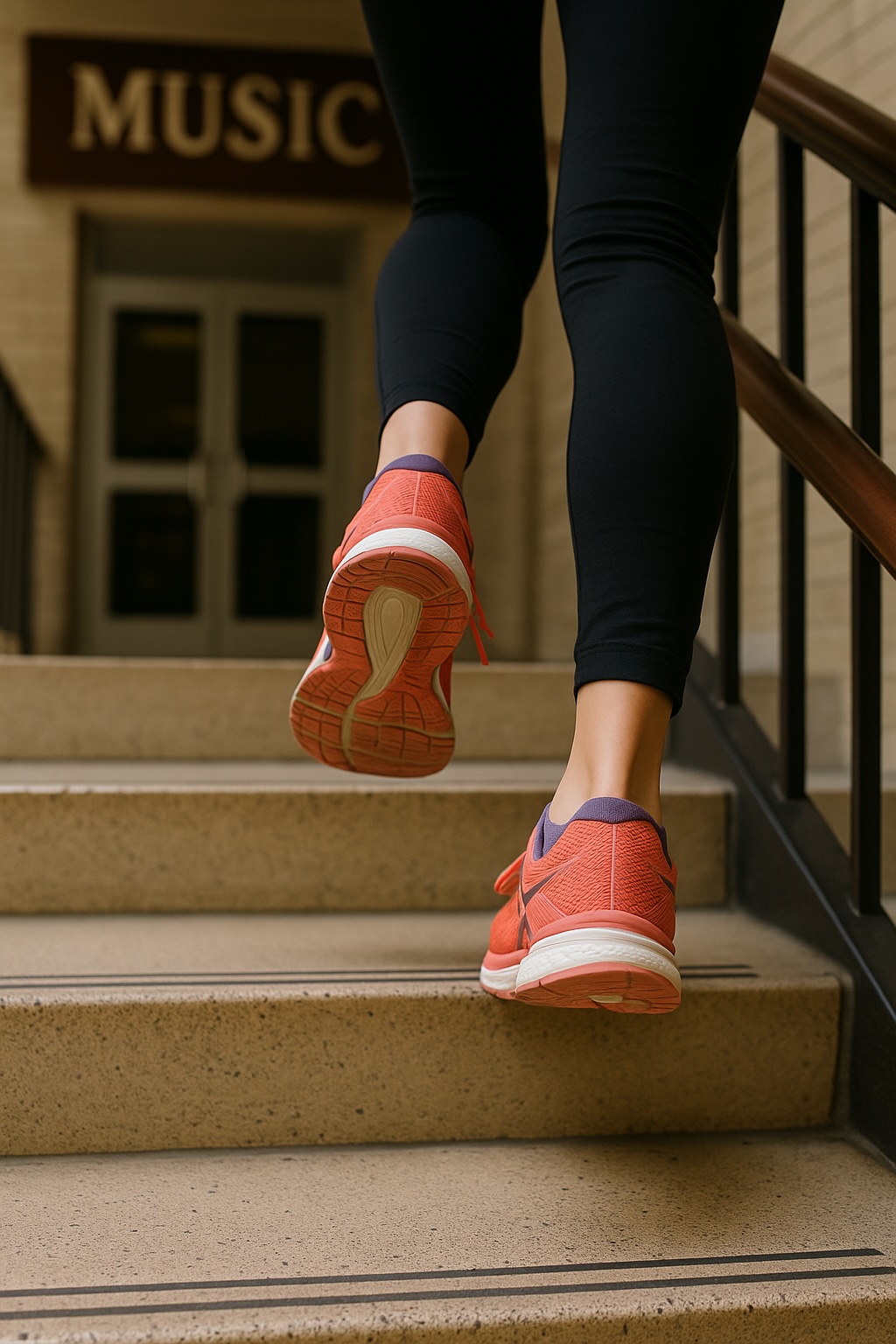
“Run down two flights of stairs and back up again. Then sit down and play.”
She looked at me curiously, but off she went. When she returned, a little breathless and red-faced, she launched into her piece. It was messier than her first attempt—but still solid.
Afterwards, I asked: “Why do you think I made you run the stairs?”
She paused, thinking I’d give her the answer. When I didn’t, she guessed: “Maybe… to make me feel stressed? Like being nervous?”
Exactly. I explained that before a performance, our body often betrays us. Our heart rate speeds up, our breathing quickens, our hands might even shake. These sensations are uncomfortable—but not dangerous. The key is to *practice performing while they’re happening*, so that they don’t overwhelm us on stage.
She now knew: “I can still get through this piece, even if I’m shaky and out of breath.”
Facing Other “What Ifs”
I then asked her: “What else might happen during a performance that could be hard?”
Her answer: “Play wrong notes.”
So we deliberately inserted wrong notes - one every eight bars. At first, the experiment spiraled into chaos, with errors multiplying the more flustered she became. We laughed together at the absurdity, but then she tried again. This time, she focused on recovering quickly. And suddenly, the wrong notes lost their power to unravel her.
Next challenge: *Distractions.*
I told her about performing in a hall where students whispered throughout, or playing in a room where people constantly walked past the window in the door. Then I turned on some loud music and asked her to play over it. The first attempt was nearly impossible. The second was much better—her focus had sharpened.
Another scenario: *What if the music falls off the stand?*
So I removed her score mid-performance. Sometimes she could keep going from memory. Other times she couldn’t, and had to jump to the end and improvise her way through. But the experience was invaluable - she proved to herself that she could *still finish*, no matter what.
The Transformation
Finally, after all of these messy, distracting, nerve-jangling run-throughs, I asked her to play the piece normally again.
She couldn’t believe how easy it suddenly felt. The once daunting performance was transformed into something comfortable, maybe even enjoyable.
Before she left, we brainstormed ways she could recreate these scenarios at home:
• Ask her brother to dance around the piano while she’s playing.
• Perform immediately after waking from sleep.
• Play for her family while they’re eating dinner and chatting.
• Have someone tell her jokes mid-performance.
Final Thought
The lesson was a reminder to both of us: we don’t get better at performing by practising only under ideal conditions. We get better by practising under *realistic* conditions - by embracing bodily changes, wrong notes, distractions, and unpredictability. When you’ve rehearsed chaos, calm feels like a gift. And nerves are no big deal any more.